The US–China Relationship Is Broken — Here’s Why (Shaun Rein)
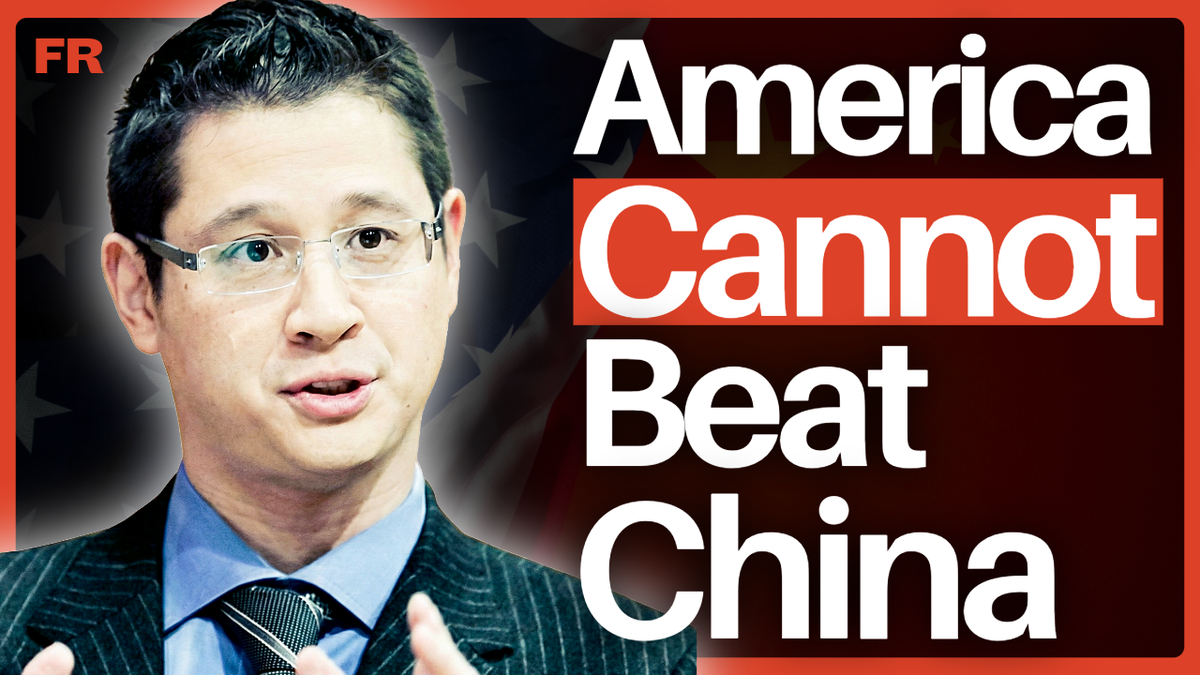
Thank you for checking out my interview with Shaun Rein.
Shaun Rein is the Founder and Managing Director of the China Market Research Group (CMR), the world's leading strategic market intelligence firm focused on China. He works with Boards, billionaires, Heads of States, CEOs and senior executives of Fortune 500 & leading Chinese companies, private equity firms, SMEs and long/ hedge funds to develop their China growth, political and investment strategies.
Bloomberg Article I referenced (GIFT LINK):
https://www.bloomberg.com/news/features/2025-08-11/treasury-secretary-bessent-on-tariffs-deficits-trump-s-economic-plan?accessToken=eyJhbGciOiJIUzI1NiIsInR5cCI6IkpXVCJ9.eyJzb3VyY2UiOiJTdWJzY3JpYmVyR2lmdGVkQXJ0aWNsZSIsImlhdCI6MTc2ODU0NzY1NiwiZXhwIjoxNzY5MTUyNDU2LCJhcnRpY2xlSWQiOiJUMFVMMFVHUFdDUDYwMCIsImJjb25uZWN0SWQiOiJFQjY0MzlEMzE4OTY0NEI4OTIxNkIxRTVFRUJEQzI4QyJ9.Z_uwklJfirwDytjSf0tiRNO3RpGWvF-Coo_G0aM57NE
This is episode 71 of the Front Row Podcast.
TIMESTAMPS:
00:00 Intro
01:24 Did China Game the System?
06:16 Governance: Serving the 90% vs. The 1%
11:52 Corporate Influence Today
16:34 The Age of Tech Oligarchs
23:06 American Companies in China
28:40 Weaponizing the Dollar & Sanctions
33:42 The Resource War: Chips & Rare Earths
37:56 China’s Drive for Self-Reliance
41:36 Venezuela As A Sign Of The Times
45:12 What Happens to BRI?
47:22 Trump’s Greenland Ambitions
50:50 The Leadership Vacuum in Europe
55:22 Biden vs. Trump on China
58:26 US and China's Domestic Challenges
01:05:51 What the US and China Can Learn From Each Other
01:09:13 Shaun's Core Insight
01:13:04 Advice For Young Professionals
Keith 00:00:00
Today I'm joined by Shaun Rein, the founder and managing director of the China Market Research Group based in Shanghai. I find Shaun interesting because he's not only spicy in his takes, but because he also has a very clear understanding of how America and China works. He's an American consultant helping American companies relocate or move to China to expand their business operations.
In today's episode, we talk about the split between the US and China, where their bilateral relations are heading, why their relations mark a split in their economic relations, and its impact for the rest of the world. I found today's conversation to be thought-provoking and intellectually challenging. I hope you'll enjoy my conversation with him as much as I did.
Bessent's view is that the problem of US policy in the past decades has been that it has prioritized cheap imports and thus allowed China, Southeast Asian nations, and even European countries such as Germany to game the global trading system. In the old days, they'd sell us a Sony and we'd sell them a GM. But we've de-industrialised and financialised. We sell them private equity. We sell them Google stocks. We sell them treasuries. All of this had distributional effects. You end up with the coast very rich and everyone in the middle much less rich.
Help me understand what is your view on Scott's diagnosis of where the state of the US economy is right now today?
Shaun 00:01:28
That's a great question. For your audience, I know Scotty. I advised him briefly when he was a hedge fund manager at Soros. I think one of the important things for people to know is that even then, when I last spoke to him around 2013, he was very anti-China. I was advising him on what stocks to invest in the country because I said that China's middle class was growing and would soon start to buy Louis Vuitton handbags and Nike shoes. For the next ten years, I was right. China became the largest market in the world for Louis Vuitton. Nike was getting 20% of its global revenue from China until recently.
The problem with Scotty is that he viewed China as a communist nation which by default was evil and by default would fudge numbers and would collapse. It was sort of Gordon Chang-esque in his analysis of the country. I wanted to put that out there because that's going to help you understand why America has failed over the last six to eight months with the trade war with China, because Scotty and a lot of the advisers around him are ideologues and they're not pragmatic, looking at the real data about the robustness of China's economy.
Now, let's go back to answering your question. There is some truth, frankly, to say that the United States might have over-outsourced too much of its manufacturing to China, to Vietnam, and to other countries. You can't blame China for this. China didn't steal jobs. China didn't do anything nefarious. They just created a wonderful manufacturing ecosystem, a reasonably low-cost and reasonably well-trained labour force, and wonderful infrastructure and tax breaks. Basically, China out-competed the United States.
In my book, The Split, I have a chapter where I talk about a metal fastener company that was in North Carolina. They came to me in 2003 and said, "We're collapsing. We can't find workers in the United States. The environmental protections and other red tape bureaucracy is too high. We're going to go out of business if we don't relocate to China." I actually spent the next couple of years helping this company move their manufacturing to China and they bloomed. They did incredibly well getting into the new ecosystem of manufacturing in the country.
Now, was China wrong for this? No. Was the company wrong for this? No. Who could be wrong? Well, actually, this company was bought out by New York private equity firms. You could argue that these private equity firms could have invested more money into the factories in the US to attract workers, but instead were just seeking and maximising profits too much. You could also say the same about Apple and Nike. Don't blame China. Blame Steve Jobs and Tim Cook and Phil Knight for relocating all their manufacturing to China.
Now, let's look at it from two other angles. First, I don't think this hurt job markets in the long term in America. Trump is always talking about how unemployment is really low over the last 25 years since American firms started putting their manufacturing into China. I think there was clearly some economic dislocation in certain parts of the country. But when you look at net-net, 350 million Americans benefited from getting cheap products so that we could have a better quality of life. Shareholders of Apple and Nike won, and then the executives at companies like Nike and Apple won. So I disagree that free trade, that globalisation is a negative.
The only thing that I can agree with Scotty on a little bit comes down to national security. Is it right that America outsources almost all of its antibiotics to China and India? That can become dangerous. Rare earths—right now, China produces about 90% of all rare earths, about 98% of high-end rare earths, especially magnets. That is probably something dangerous for the United States.
Long-winded answer, Keith, but I think there's some truth to what Scotty's saying, but not really. I think trade with China helps the United States, helps the American people. We just need to make sure that every country has enough manufacturing from a national security standpoint in case, unfortunately, global tensions continue to rise.
Keith 00:06:20
I think what Scott Bessent kind of alluded to was there is this idea of de-industrialisation in the US and excessive financialisation, where there is maybe excessive or maybe one would say absolute prioritisation of corporate profits, returning value to the shareholder. I wanted to ask you on the policy side, could this fate of de-industrialisation that spread across the US actually have been avoided, or is this something that's part of the course when you open yourself up to free trade?
Shaun 00:06:46
You bring up a very interesting philosophical point. Let me take a step back and look at what should governments do. What is the role? Should governments be looking at helping the majority or looking at the small group? Should they be helping the 90%, the low-income and middle class, or should they be focusing on helping the 10%, the movers and shakers who get the economy going?
In the United States, they take a very different view from China. In China, the CPC really focuses more on the 90%. I was talking to one of China's billionaires about ten years ago, and he said, "The CPC, the government, is always going to be good for the people, always going to be good for the masses, not so much for the rich." He smiled at me. He said, "Yeah, I've gotten really rich, but you know what, Keith?" He was arrested five or six years ago and he's been in jail for corruption since then.
The government in China makes sure that everyday people, especially under Xi Jinping in the last six or seven years, are getting access to healthcare, getting access to education. Now, by doing this, this hurts the wealthy 10%. The billionaire that I spoke to was corrupt and so he got arrested. He was unable to jack up housing prices, make a lot of money.
Now, I'll be honest. Over the last five to six years, my personal finances have taken a hit by a lot of Chinese common prosperity policies. But if I was greedy, I would complain about Xi. But I'm not greedy because I think when you take a step back, the purpose of a government is to help the majority. The CPC, with all their warts—they have a lot of shortcomings—are doing a good job in helping the 90%. They're reigning in the corruption and excess of the real estate firms.
Now, why do I bring that up, Keith? Because I just was in the United States a few months ago and my son, Tom Rein, moved to Austin, Texas. We were looking for a house for him near the UT Austin campus. It was shocking, absolutely shocking, how expensive the rent was for places that were dirty and crappy. When I talked to the real estate agent, I asked him why. He said, "Here's what's happened, Shaun. Blackstone, a private equity firm, backed the buying of every major real estate area within a 10-15 minute walk of UT Austin and put up for-profit dormitory apartment-like things. These units are really small. They might be clean, but they're charging $4,000 US a month for a small room inclusive of subpar food."
If you don't want to live in one of these for-profit dorms that are backed by Blackstone, you're going to be living in really crappy student housing where the owners know that they continue to make money because there's just a dearth of supply, and so they never do renovation, they never do fixing.
The issue is the United States has set up over the last 50 years, I'll say my entire life, as helping the wealthy 10%. It's a wonderful country if you want to get rich, if you want to raise venture capital, if you want to be the next Elon Musk, if you want to be the next Peter Thiel. America creates wealth for the top, not just 10%, let's say the top 1%, far better than China. But it also comes at a cost. In China, you don't see people on the street homeless. You don't see major drug addiction. It might not have the electricity and vibrancy of the wealthy going out and booming and making tonnes of money and buying Ferraris. But in the United States, you've got homeless everywhere. You've got drugged-out people everywhere. You have crime everywhere.
I think philosophically, your question is what should a government be? Should it help the minority or should it help the majority? In a communist country, because we don't vote in China, there's no way to voice displeasure with your government. In my mind, that means the government has to placate the majority because if they don't placate the majority, there's going to be violence and they'll get killed. They have to make sure that most people are happy.
In the United States, politicians just focus on making their donors and the people who vote them in happy. Everyone else, they don't care. You can see it—congressmen, senators, Democrats, Republicans alike. They all say, "If you don't like what I'm doing, vote me out in two years. Vote me out in six years. Vote me out in four years." That vote and the power of the vote in many ways hurts the majority because their voices aren't heard, because politicians will say just vote me out.
Keith 00:11:55
I heard from an ambassador in Singapore, one of our early ambassadors to the US. He said that the influence of capital in the US has gotten to a point where it's close to a plutocracy, where you have democratic interests increasingly captured by corporates.
Shaun 00:12:14
I don't think it's the corporates. I don't think it's the Fortune 500, frankly. I think the Fortune 500 probably had a lot more influence 40 years ago. Companies like DuPont, a company like P&G or IBM, I think they had a lot of influence then. But you look at it now, the heads of these companies make $5 to $20 million US a year, which is a lot of money, don't get me wrong. But the real money is coming from the hedge funds and the private equity firms, where it's very common to make $100-$200 million US dollars a year.
You see Joe Bae, the co-CEO of KKR, made $130 million US last year. Now, he's a great guy. He's a great investor, but he's making six, seven times now what the typical Fortune 500 CEO is making. That's not even including the equity that guys like Steve Schwarzman from Blackstone, Marc Andreessen from a16z, are making from their equity holdings in some of their companies and when their own companies go public, like David Rubenstein at Carlyle Group.
I think what's happened is it's no longer a plutocracy of the Fortune 500 companies or even the old money, the Upper East Side sons and daughters of the Mayflower. It's now switched towards the tech founders and the hedge fund and the private equity founders who are going out and they have $20 billion, $50 billion—and Elon Musk has $700 billion—and they're going out and buying politicians.
Now, in China, that would be considered illegal, having the corporates or the wealthy people too close to the politicians. In America, it's not considered illegal. It's called legal campaign contributions. It's lobbying. It's setting up a PAC. You look at it, the biggest donors to the US government are people like Ken Griffin from Citadel, a hedge fund, George Soros, another hedge fund, Elon Musk from Tesla and SpaceX and Twitter or X, whatever you want to call it. You have 10, 20 people who are spending massive amounts of money legally influencing elections not just in their home state but across the United States. They're becoming very powerful.
One of the differences I found, because I'm American but I've lived in China for most of my life—I'm turning 48 and I've been in China for about 28 years—is that in China, the businessmen are controlled by the politicians. In America, the politicians are controlled by the businessmen.
You can look at it. One of the biggest China hawks in Congress who was on the US-China Select Committee, he was from Wisconsin. He was always criticising China, said it was evil. He left his position as a congressman to work at Palantir, which is basically the new version of a tech defence contractor. I think you see that these politicians are working with defence contractors while they're still politicians to get rich, and then they leave.
Now, there's probably nothing technically illegal about that, but it's clear that if you attack China like Mike Gallagher did and then you join Palantir, there might be an understanding or a quid pro quo that's not stated, but everybody knows what it is.
I think the other guest you're talking about has some truth to that in terms of a plutocracy, but I don't agree that it's corporate plutocracy. It's more the finance capital guys and the tech guys in Silicon Valley.
Keith 00:16:21
To be fair, a lot of them have become corporates themselves. If you look at a Meta, for example, they're actually a full-on corporate now. Maybe some of these tech founders, they just represent a new age of corporates as opposed to the previous age of corporates.
Shaun 00:16:38
Yeah, exactly. You see them—you see Alexander Wang. He started Scale AI that was acquired by Meta or Facebook for $18 billion US. Now he's ethnically Chinese. I don't remember if it's his grandparents or his parents. I think it was his parents who moved from China to work in Los Alamos. But basically Alexander Wang is pushing hard about the China threat: "We have to beat China."
Now, I don't know if it's because he's ethnically Chinese and doesn't want to be viewed as a spy in the United States, so he has to take a strong stand against China, or if maybe it's because he's trying to get better policies and more subsidies. I think one of the arguments that Europe and the United States are making right now about China, especially when it comes to NEVs, is that it's unfair because China gives out and doles out so many subsidies.
But when you look at the subsidies in America, it's enormous. Elon Musk would not be Elon Musk without the subsidies from the United States government. A guy like Alexander Wang is sitting next to Trump in the White House a few months ago when they had a meeting about AI. You see earlier this week the CEOs of Exxon and Chevron are saying to Trump, "If you want us to invest that hundred billion dollars into Venezuela to get the sour crude oil pumping and refineries going in that country, we need to get guarantees from the United States."
Right now, the US government has basically become a handout to well-connected companies at, to me, a far greater level than anything in China, despite what you read in the Wall Street Journal or the New York Times or Bloomberg about the unfair subsidies that China is giving for NEVs.
Keith 00:18:36
If you look at, for example, the financial crisis in '09, when the government bailed out a lot of the banking giants within the US, one could argue that was actually a form of subsidy as well.
Shaun 00:18:51
The US has always given subsidies—bailing out the banks, bailing out Detroit. I find it very hypocritical when the United States government criticises China for a lot of areas: economic coercion, militancy in South China Sea or Taiwan. I think America does many of the same things and actually probably does things a thousand times worse. It's just how you couch the terminology, which is why I'm scathing of the Wall Street Journal and New York Times.
If China arms itself, then that's militancy, increasing aggressiveness. "They threaten our value system. They want to take over the world." I mean, David Perdue, who's the new US ambassador to China, wrote an op-ed last year or a year and a half ago now, saying that China was trying to invade the United States and implement a Chinese value system on America. I think that's hogwash. I don't think China has any interest in invading other countries. Now, it considers Taiwan, Hong Kong, Tibet, Xinjiang its country, but it's not going to go into the United States.
But when America does the same thing, it's deterrence. It's the modern version of the Monroe Doctrine. It's about ensuring national security by killing people, fishermen just floating around in extrajudicial killings off the coast of Venezuela. It's threatening to take over Greenland under the guise of national security that Russia and China is supposedly up there, when at the end of the day it's more about the rare earth deposits that are in Greenland. It's become a kleptocracy.
What the United States does when they criticise China, it always shocks me that my fellow Americans don't realise that we do the same if not worse. I like to use this as an example: Right after America took out Maduro in Venezuela, China didn't do much. Nicholas Burns, the former US ambassador to China, said, "This shows China's weak. They've lost face."
But here's the thing, Keith. China only has two military bases outside of mainland China. America has over 800 military bases in over 80 countries. China clearly is not the military threat that America's government, that Silicon Valley like Alexander Wang, the military contractors like Mike Gallagher of Palantir, are making it out. If China couldn't even defend Maduro, then is China really poised to launch attacks across the world? I don't see China being a militant nation that's trying to become a hegemon anytime soon. Maybe they will 10, 20 years from now, but I just don't see that in the cultural DNA. They're very different from the cowboy warmongering culture that we unfortunately have in the United States that gets us stuck in endless wars.
Keith 00:21:52
Early in the early days of Singapore, when a lot of the citizens, newfound citizens, were Chinese, there was a huge aversion to even conscription politically. The founding leaders here in Singapore had to find ways to make it palatable for them to even consider two years of conscription. You're right in that point that there is something culturally within Chinese culture that is very averse to over-militarisation.
I wanted to ask you a paradox that I've observed, and maybe that's where your insight might come in useful. You've pointed out someone like Elon Musk, a lot of these American newfound titans, have a huge sway in how Washington dictates its policy, especially its foreign policy towards China. But at the same time, you have someone like Elon Musk who's been to Shanghai, who's set up a gigafactory there, who's done a lot of investments within China as well. Then my question becomes: why is that strain of "China is evil, China is bad" thinking remains such a dominant stream, despite the fact that you have a lot of these elites—one might say they have actually done a lot of business in China themselves?
Shaun 00:23:10
The reality is a lot of them haven't done that well in China. Elon Musk, he makes hardware. He's done very well here. Bill Gates is always welcomed as a friend of China. Microsoft has made a lot of money. You've seen Apple clearly has made a lot of money. But aside from those three, a lot of Silicon Valley has been shut out of China.
Now there's a discussion: Is it that China has too many onerous regulations, censorship, that prevents the Western companies? Or is it the Western companies don't want to make the concessions that they would have to make? Apple has flowered in China, but they're willing to censor apps. They're willing to do what needs to be done to adhere to what the Chinese government wants. And they have been fabulously rewarded for that, with China being the second largest market in the world for Apple.
But you see a company like Google. Google was allowed in China, but they had to censor. It wasn't the Chinese government that blocked Google. It was Eric Schmidt and Sergey Brin and Larry Page who one day said, "We don't want to censor anymore." And so they pulled Google.cn out of the country. For Americans, a lot of them say, well, the Chinese government banned them. From the Chinese perspective, it was no—Google would have been allowed to operate its search engine in China if they agreed to follow censorship.
Now, in my own mind, the reason why Google left was not because they said "do no evil"—they said they don't want to censor and be implicitly involved with evil Chinese government policies. It was because they lost. Google and Kai-Fu Lee got their butt kicked by Baidu and Chinese search engine players. Kai-Fu Lee in my mind failed as the head of Google and lost market share to Baidu.
If it was about "do no evil" and purely a political stand, why does Google make billions of dollars in China today? The whole Android operating system—my office is in Lujiazui, and just a couple minutes' walk away from my office at the World Financial Center, there's a huge Google operation. So they make tonnes of money in China. It's not that China blocked them, it's that they left.
LinkedIn, which I used to be very active on—I actually helped LinkedIn. I was their strategy consultant when they first came into China. They were allowed to be in China. It was a couple of years ago Microsoft decided that the storage and data laws were too onerous in China to continue. But frankly, I think they left because they were worried about being attacked by DC and activists in America. They didn't want to be attacked for censoring. For LinkedIn, which also wasn't doing very well after it was acquired by Microsoft in China, I think they said, "You know what, the risk and reward is just not worth it. Let's pull out."
Silicon Valley has often failed. Now again, you can argue it's because they lost money. You can argue that the Chinese government was too much. But it's very clear to me that China said, "Here are the rules. You can follow them if you want to follow them. Even though you're American, you can stay in China."
This is very different from what's happening in the United States right now. In the US, because TikTok is owned by China or Chinese people and Chinese companies, they are automatically banned. I think that's wrong. TikTok has said, "Whatever rules you want us to adhere to, we will do so. We will house with Oracle in the US. We will put our data, we will hire thousands of people. We will do whatever America wants. Open up the kimono and allow you to see what we do so that we can stay in America."
But because they're Chinese, America automatically bans them. It's the same thing with DJI and drones. They were banned just because they're Chinese. There's no evidence of wrongdoing. There's no roadmap for a Huawei, a DJI, or TikTok to invest in America in the way that there is a roadmap for Google. There is a roadmap for Facebook.
The other thing, Keith, before I end this, is that Zuckerberg—Facebook generates about 10% of its revenue or about $5 billion US dollars a year selling to Chinese. They sell to Chinese companies. So for them, the risk-reward was: "We don't want to censor and get attacked by America. It's better just to sell our ad space to Chinese companies that are trying to sell their products into the United States."
Keith 00:27:57
This captures a little bit of the dynamic of the split, which I think you talk about in your book. There is a split in not just, I guess, policy infrastructure or even economics now—it's that literally there's just two different views of the world represented by the US and China. I want to quote something from your book. You said, "The world is splitting between the US and China. No government, no country or person is immune to the rising tension between the world's two superpowers. Countries must choose if they want to get closer to China's economic orbit or America's. And it is virtually impossible to be neutral and trade closely with both."
Where do you see the split being most pronounced today?
Shaun 00:28:46
Let's just look at what's happening in the last week in Latin America and the Caribbean. Trump has taken out Maduro in Venezuela and they have been sanctioning or threatening sanctions throughout Latin America and the Caribbean. It's mafia-esque. They basically are saying to countries, "Follow us, be our vassal state, decouple from China, or we might take you out." They have threatened to go into armed aggression into Mexico. They're talking about how the days of the Cuban government are coming to an end.
In Trinidad, they've installed radar and military equipment in Trinidad's largest airport. They've put sanctions on not just politicians in Latin America and the Caribbean, but also on their family members. It's really mafia-like. It's "do what we want or we will sanction not just you but also your children."
When you have some of these countries that are only a couple hundred thousand people or a couple million people, getting sanctioned by the US destroys your life. You can't get credit cards. It's not easy to travel on American carriers. Your kids can't go to the United States to study. It's devastating for people who get sanctioned from the United States because the US controls the US dollar trading system.
That's why I think there's a de-dollarisation push from China and Russia and even the UAE, because a lot of these countries, their leaders are worried that they'll be next, that if they don't do whatever America wants, they'll get sanctioned. When China sanctions, it really doesn't matter. China sanctioned Marco Rubio. Who cares? China sanctioned Anduril's founder Palmer Luckey. Who cares? They don't have assets in China. They don't care that they can't do business with Bank of China.
While you look at the Hong Kong Chief Executive Carrie Lam during the terrorist rioting attacks in 2019, she got sanctioned by the US and she said that her life was very difficult afterwards because no bank wanted to let her have accounts, even Chinese banks, because in order for the Chinese banks to be global, they have to trade in US dollars. So she was getting paid in cash.
You see Francesca Albanese, I think her name is, from the UN, who was talking about what's happening in Palestine and Israel and Gaza and said that this was crimes against humanity, genocide. She has been sanctioned by the US and she said that she's having problems living a daily life. You see the ICC prosecutors who wanted to potentially take Israel to court for genocide in Gaza. They got locked out of their email account because their email accounts are on Microsoft.
I think, Keith, what you see is the United States is using a cudgel. It's quite scary in Latin America and the Caribbean to force people to adhere to whatever Trump wants. That's right now the biggest, most dangerous area where you see this choice: China versus the US. But I think you're going to see it repeated throughout the rest of the world.
If Trump is saying we're going to control Venezuelan oil, there's a question of will Venezuela be allowed to sell their oil to China. China's invested hundred billion US dollars over the last couple of decades to prop up Maduro and the previous administration. Iran—China gets 20 to 30% of its oil from Iran. If the Iranian regime collapses and you put in a puppet or vassal of the United States, will the US force them not to sell oil to China?
It's a very dangerous time, Keith. I'm typically a very optimistic person, but I have felt this impending sense of doom over the last five to eight years in the world because the Americans—and I love America. I think you and I have talked about this in the past. I might want to become a senator or I would love to be Secretary of State. But I feel that our endless warmongering and bullying might cause a World War III and at the very least is going to cause impoverishment for billions of people around the world because America wants to control too much and is using weapons and bullying to extract what they want. Economic coercion has been far more serious than anything China has ever done.
Keith 00:33:39
What we are seeing right now is between the US and China—they're both trying to find leverage or control over resources, strategic resources for the global economy, be it oil, rare earths, critical minerals. Each is trying to find something they could have leverage over the other. So maybe in the case of Venezuela, is that a step one, from the US perspective, to try to secure oil as a strategic resource that it could then have leverage over China, just as China has over the US with regards to critical minerals?
Shaun 00:34:25
Right now we're fighting a war for resources, commodities, around the world, and it's dangerous. In my book, The Split, I have two chapters that I hope readers look at. One chapter is on semiconductors and the other chapter is on rare earths.
Even though the book came out at the end of 2024, it's still extremely relevant because I predicted almost month by month what was going to happen. I think the United States made a huge mistake by limiting the exports of Nvidia and other chips. They wanted to do that to control China, and this is something that the Biden regime did. Huge mistake, because China wasn't just going to roll over and die.
China has the money, they have the engineering talent, they have the government ecosystem, and their backs were against the wall. So over the last five to six years, they've been focused tremendously on semiconductor innovation. You've seen just in the last couple of months, I think Cambricon and other Chinese semiconductor companies, their share prices have soared in IPOs. AI companies have soared in IPOs because it was clear that China had to make its own indigenous innovation sector in semiconductors because they were forced to by the Americans.
We see that Jensen Huang, the founder of Nvidia, said that they went from a 95% market share to 0% and sold zero of their H20 and I believe H200 chips in the last quarter.
When you put sanctions on Chinese companies, it's going to cause them to innovate. It doesn't destroy them. My criticism of China is that in October during the trade war, I don't think they should have threatened exports of rare earths as much as they did. I understand why they did it because Trump was coming back with tariffs that were out of control, but I think by showing that they were willing or could put restrictions on rare earth exports to other countries, not just the US, but to Japan and all over Europe, that scared a lot of these other countries.
I think you're going to see other nations are going to be investing billions, if not tens of billions, if not hundreds of billions, into building up rare earth refining. That's why you see what Trump is doing in Venezuela, as you said, is to control oil as leverage. But I also think that's why he wants to grab Greenland, because there's a lot of rare earth deposits there.
The next 10-20 years, the world is going to see a lot of tension and fighting over not just oil but other access to commodities. Even in the last couple of weeks, I've been telling everyone to buy silver. In the last couple of weeks, silver prices have soared because China's threatened to put export controls on silver—not a rare earth, but it's still something that's needed in the industrialisation or re-industrialisation of the United States if that happens.
It's a very dangerous time, Keith. That's why I think you see in China, a lot of young people aren't getting married. A lot of young people aren't having babies because they're very fearful what the next 20 to 30 years is going to look like because of the geopolitical situation and the Sinophobia that's emerged in the United States.
Keith 00:38:02
If we look over the past, say, decade, because Made in China 2025 just concluded, it seems to me that the point of China investing so much into its technology stack is to decouple itself from the US, or at least reduce its dependence. One could argue that trade diversification, while useful, it's not fundamental, whereas technology is fundamental in a certain sense. They didn't want to be reliant on semiconductors from the US. They didn't want to be reliant on chemicals from the US. As a result, what we're seeing now today is that even if their semiconductor performance is not on par with, say, for example, Nvidia, it's enough that they could survive if, let's say, the US decides to go all out against China.
Shaun 00:38:45
Yeah, absolutely. It's not just semiconductors. China's trying to become self-reliant on everything: beef, soybeans when they can, blueberries. They're worried that the United States, starting with Trump in 2017, is trying to destroy the global financial trade network. China can't rely because they're worried about sanctions on other countries for key input items.
If you go to Shandong Province, there's tonnes of beef. If you go to Yunnan, there's tonnes of blueberries. They're trying to become self-sufficient in everything. That's one of the reasons why I'm concerned about foreign trade. While there will still be good opportunities for Australia to sell seafood and beef and berries to China, the reality is that China wants to have it done homegrown because they do view it as a risk.
I think you see a lot of other nations, because of the split, are being forced to decide: do they want to go with the US or do they want to go with China? A lot of non-Chinese countries that align with China want to buy Huawei. They want to buy Cambricon. They want to buy Chinese technology in a way to decouple or de-risk from the United States.
But unlike China—China will just, if you do something that China doesn't like, they'll just stop doing trade with you. I wrote about this in my book, The War for China's Wallet, that if Japan does something or the Philippines does something, then China just will stop trade. They'll stop selling you products. They'll stop buying your products. They will stop Chinese aeroplanes from flying to Japan to bring tourists there.
The United States goes a lot further. They'll threaten you militarily. They'll take you out like they did with Maduro or Gaddafi in Libya, and they will force other nations not to do business with you. China never says to Korea, "Okay, we're mad at Japan. You now, as Koreans, can't do business with Japan." China doesn't do that. But America does do that. America says to Korea or to Japan or to the Dutch, "If you want to keep doing business with the United States, then you can't do business with China."
That's why the Dutch, they are not really selling the high-end or servicing the high-end ASML semiconductor lithography equipment right now because of American economic coercion. I think what you're going to see is a lot more nations are probably going to gravitate towards America over the next couple of years because of just the raw military power and the willingness to do maybe devious, arguably, methods as a means of leverage.
Keith 00:41:51
I think there's a lot of kind of commentaries out there talking about Venezuela, China's role in Taiwan, for example, and that they might embolden China to act in a way that is more aggressive. I speak to the more enlightened analysts in my kind of circle in Singapore, and they kind of just point out that actually, China doesn't need to take a cue from the US as to how it should act. It will just act purely in its own interests.
My question to you would then be: if you look at the impact of the takeover, one might call it, of US over Venezuela and its oil fields, or its attempt at least, what are kind of the strategic long-term implications that you think are real and tangible that will now factor into Chinese calculations of how it deals with its foreign affairs?
Shaun 00:42:35
Well, I think the key—you're going to see there's going to be a lot more spending on military. You're going to see China is going to spend billions in R&D and they're going to push more sales to other nations. You might even see other nations say, "Well, if you want to be close to us, you have to send Chinese troops to help guard us," the way the Cubans tried to guard Maduro in Venezuela.
You might see that China won't be content with just two military bases anymore in the world and they're going to want to project power by opening up military bases throughout the entire world to be able to serve as deterrence against American hegemony.
That's why I'm really—I'm not defending Maduro. I don't know if he's a good guy or not. I'm not an expert on that area. But I think this to me is just yet another example of regime change and endless wars that the United States likes to do. They put their excuse in a nice box and they put a bow tie on it and they say it's because Maduro was a narco-terrorist or selling drugs.
But my question, Keith, is if it was about drugs, why did they keep the vice president? Clearly the president alone wouldn't be running a cartel. He would have the complicity of the people around him. Secondly, if it was all about drugs, why did Trump pardon the former president of Honduras who was sentenced and found guilty in the United States for drug trafficking?
Again, I'm not an expert on Venezuela, but I have spoken to government officials from around that region and they've told me that Venezuela might be a conduit or stopover for trafficking, but they're not the ones producing and they're not big. It's going through Venezuela and going through other countries until they get into the United States.
To me, this is not about narco-terrorism or drug trafficking. It's about flexing power, threatening the tiny, and plundering Venezuela of its natural resources. It's very 19th century might-makes-right colonial-like thinking. That unfortunately is going to increase tensions over the next 30 to 40 years.
Now, for someone like Trump who's almost 80, he doesn't care because he's going to be dead. But for those of us who have children, we need to be cautious and hope that more pragmatic minds prevail in the United States. But unfortunately, we haven't seen that for decades. We just keep warmongering.
Keith 00:45:20
What are the economic implications of this takeover of Venezuela on China's BRI? Because if you look at the BRI, it's an attempt at greater economic integration across the world, not necessarily Venezuela specifically, but it looks at countries that may be more aligned to its interests and trying to build stronger and deeper relations. But now if you look at this, does this actually throw a wrench in the works of China's efforts to continue building up the BRI?
Shaun 00:45:45
Yeah, it does throw a wrench. I think countries typically like to work with China because they help them get rich, they help them create jobs, they get the infrastructure investment. That's why China, 20 years ago, was the largest trade partner of like 40 countries. Now it's 140. It's flip-flopped with the United States.
When I travel around Africa and Southeast Asia and the Middle East, they like doing business with China because there is a non-interference—I don't want to say no strings attached, but it's less hegemonic as a political creature than the United States.
Keith 00:46:19
It's transactional in that sense.
Shaun 00:46:27
Yeah, I think that's a good way to term it: transactional. But I think the global South or the global majority is going to see what happened in Venezuela and be scared, and they're going to say, "Well, if we don't do what America wants, they might take us out too. And China might give us money, but they don't give us any protection."
I think this does throw a wrench in BRI. It's not going to be huge at first because China is going to want to keep investing. But I've been speaking with government officials in Latin America and the Caribbean over the last few months and they've told me that their governments are less welcoming of Chinese money than it was a year and a half, two years ago, because of the fear of what the Trump regime might do with economic sanctions previously and post-Maduro capture or kidnapping with military action.
Keith 00:47:22
Well, I wanted to talk a little bit about Greenland, because I think Greenland shows a very uncomfortable reality, which is that when President Trump talks about wanting to take over Greenland, whether it's by force or by peace, he's in effect—one would say that he could threaten the entire dissolution of NATO. Because if you look at Greenland as part of Denmark and its place within NATO, it's an attack on NATO itself. But no one kind of had this scenario in their mind five or ten years ago that a NATO ally would attack another NATO ally. But here we are, that this could become a very real reality.
Shaun 00:48:10
A lot of people are asking geopolitical analysts, "What is Trump doing in spheres of influence?" I'm not a psychologist, but I don't think Trump has a grand plan. I think he's a malignant narcissist, and so we need to have psychologists look at what he's doing. I think he gets excited about causing tension and being the centre of attention and wielding power over other people. I think that he also likes profiting himself.
Now, I don't have any proof of that, but there's a lot of rumours out there that there's cronyism and oligarchs and all the people around Trump and his family are making a fortune. Now, I have no evidence, no proof of that, so I don't know if it's true, but I wouldn't be surprised. That's what other people are saying. But I do think that we need to look into his psychology more than spheres of influence.
I think he's ripping up the playbooks of American realpolitik or neoliberal geopolitical strategy and he's just doing what he wants. Grab Greenland because he wants it. Threaten Europe because some of the Europeans don't kiss his arse and aren't nice to him. I think he's unravelled in the last year, year and a half. I think he's very different from Trump in his first administration that had more guardrails and that I think was better run.
I think this current administration is quite scary because it's not a king complex. It's not a God complex. I think Trump feels that he's above God, and it's very dangerous when you see how the cabinet, Nobel Prize winners, other nations kiss his arse. It's scary.
Keith 00:49:54
The NATO Sec-Gen has not come out to actually make any public statements about President Trump's comments. That's one. And I think two, within Europe there's a lot of anxiety. If you were to look at the split, it seems that Europe—I would think by now would have taken a much more calculated approach with regards to President Trump. The good example that I thought we could discuss was a little bit about Nexperia and Wingtech, the case where there's one run by the court-appointed administrators in the Netherlands over the semiconductor producer based in the Netherlands, Nexperia, and then its parent company in China aligned with Wingtech. That was actually a result of the Dutch government trying to fulfil or trying to comply with President Trump's extended or expanded sanction list, which included now subsidiaries of Chinese companies.
Shaun 00:50:52
Europe should be the big winner of US-China tension. Europe should play America and China off each other and try to extract the best trade deals possible. Individually, European nations are small—$3 billion, $4 billion, $5 billion in GDP. But together, they're powerful. They're about the same size as China.
But I think Europe has been mismanaged over the last 17 years in an almost criminal way. When you look in 2009, Europe as a whole had a higher GDP than the United States. Now they're 40% smaller. I just don't quite understand what Europe is doing.
You see people like Mark Rutte, the former prime minister of the Netherlands, who's the Secretary-General of NATO. He's gone on record saying that China will obviously force Russia to attack NATO countries and China is the big threat. But then he remains curiously silent when Trump is actually saying, "I'm going to take over Greenland."
You see Kaja Kallas, who is the former prime minister of Estonia—and when they talk and criticise Chinese corruption, her father was the former prime minister of Estonia too. It makes you wonder what's happening there. You don't see in China under communism where any president had their kid reach a high level in the party. That just hasn't happened. But you see kids of former presidents or prime ministers in liberal democracies often becoming prime ministers. You've seen it in Estonia. You've seen it in Japan. You've seen it in the United States.
You've seen Ursula von der Leyen, the president of the EU. They've attacked China, but they've been curiously quiet about Trump and Greenland. I don't know why. I don't know if they're paid. I don't know if they're scared. I just don't quite get it.
Now, I think in many cases you see a lot of British prime ministers, especially when they stop being a PM, they end up working for American companies. Tony Blair sits on the international board of JP Morgan. Some of them go off to Google or go off to Facebook. Rishi Sunak has done the same thing, working for American banks and tech companies. So I don't quite understand it.
They're weak. I think the people of Europe deserve better. You see a lot of incredibly innovative, smart, wonderful, moral Europeans, and they're being led by weak, spineless government officials who, I think, are bigoted and racist. They don't want to get close to yellow people, brown people, and black people. They prefer to look at them as colonial-era type cartoons. They're more willing to work even with Trump, who's directly threatening to essentially dissolve NATO.
Only Germany, to their credit, has been quite forceful in pushing back against the United States. It's quite shocking to me, frankly.
Keith 00:54:04
I thought that with the Greenland issue coming up, I thought that there would be much more kind of vocal opposition or at the very least there should be some form of government or policy pushback. But relatively, given the threat, the response seems relatively muted. Why is NATO's head silent after criticising China all these years and saying that he might want to open up an office in Japan in Tokyo because China is their biggest threat?
I challenge anyone to tell me where China's president has ever said that he wants to take over militarily a single NATO country. I challenge the audience to tell me that. I haven't seen that anywhere. But you have Trump daily doing this about Greenland.
Shaun 00:54:57
So if you look at US and China, it's clear that they will still be dominant geopolitical players. The US, I think, for a lot of the flaws that I think you have elaborated and you've pointed out, remains a very strong, vibrant, dynamic, innovative economy. And China on the flip side, although is a very strong industrial economy, it continues to see significant headwinds, especially in the consumer space.
Could there be a road out for both countries for a form of rapprochement where maybe there could be complementarities for both economies, and is the split really inevitable? What could take us away from that split?
I think it's inevitable, but I do think Trump is probably the only politician who could rein it in because he's got such popularity and just doesn't care about other people that if he wants to have good relations and a rapprochement with China, it can be done. I don't think any other politician can because there's too many warmongers, too many Sinophobes, too much pressure in America that would force any politician to take an easy way to get canvas for votes and scavenge for support by attacking China.
Trump is probably the only one who can have some sort of a rapprochement with China. To his credit, I actually like Trump's China policy more than under Biden. I think under Biden, we basically had a situation where it was liberal democracies versus evil communist authoritarian nations. It was basically evil versus good, cowboys versus Indians. I don't think anything that China could have done could have created a rapprochement with Biden. He was an ideologue.
I'm hopeful that Trump will come in April and visit Beijing and Xi will fête him as a hero. They'll play to his malignant narcissist side and maybe there will be more of a rapprochement. But I don't see the likelihood of going back to the Bush era or even the Obama or Clinton eras anytime soon when—I do think that we're on a positive direction going forward. I think it's negative under Biden because he's an ideologue.
I mean, he was the chair of the Senate Foreign Relations Committee for decades. Biden, more than maybe any other man in the United States history, has been behind all of our warmongering over the last 40 or 50 years. I think Trump is just doing it about power. Again, flexing. He'll attack China, but he'll also attack NATO. He'll also attack Venezuela. He'll also attack India. I mean, tariffs from India right now are higher than tariffs on China. It's kind of crazy.
I was actually talking to the CEO of a major apparel company who moved a lot of his supply chain from China to Taiwan, Vietnam, and India over the last couple of years because he expected and wanted to adhere to what Trump wanted. He told me the other day actually he ended up moving his supply chain out of Taiwan back to China because imports from Taiwan into the US in his categories have tariffs that are higher than imports from China.
So I think Trump, again, it's not this grand strategy. It's very malignant narcissist-based where can he get power, extract things. That's where you have a potential for rapprochement with the United States and China. But again, I don't see that happening anytime soon. I think the split is right on for the next 10-20 years minimum.
Keith 00:58:29
Where do you think the structural headwinds are for both economies?
Shaun 00:58:35
I think both countries are facing a lot of challenges. I think in the United States, the political polarisation is scary. I spent a couple of months in the US this summer for the first time in 25 years, and the Democrats just hate the Republicans and say they're evil. Then when you talk to Republicans, they just hate the Democrats and say they're evil. I've never seen such anger before from everyday people, except for maybe in Cambodia where there's a lot of anger, you know, coming down still from the Viet Cong era and tensions with Vietnam. So there's a lot of anger.
The second thing that scared me was how poor so many Americans are. I interviewed a lot of Americans who had good jobs. There's one woman I met who's a schoolteacher and she worked a full job as a schoolteacher and then after she got out of work, she became a security guard at a housing compound because one salary wasn't enough. Then late at night and on weekends, she entered the gig economy and drove for Uber and Lyft.
I think one of the problems, Keith, that's happening in the United States is anger combined with impoverished middle classes. That's a recipe for disaster. When you look at it, every major civil war or revolution in the world pretty much started not from the poor people, but from disenfranchised middle class, university educated, who had dreams of living well. They can't live well because they see wealth inequality. They can't get good jobs. They view there's corruption at the top and they get angry.
I am very worried about social turmoil in the United States. It's bad. It's bad out there.
Now, when it comes to China, I think it's different. It's peaceful here. The quality of life is quite good. You can walk out at 2 in the morning. It's efficient. The government is constantly improving on their services. But there is this anxiety that's hit the population because real estate has dropped 30 to 40%. Income is very weak. A lot of people have faced salary cuts or stagnant salaries over the last five, six years. There's a worry that the government isn't pro-business enough.
I think you're seeing a little bit of economic stagnation in China and it's very hard to rebuild those animal spirits. If you don't get those animal spirits, you're going to face deflation and involution. If you don't rebuild those animal spirits, you're going to have a demographic time bomb because nobody, like I said before, wants to get married or have kids. If you don't have animal spirits, then housing prices are going to stay 30 to 40% down from their highs. If that happens, no one's going to get excited and spend money again.
I think you have a lot more vibrancy in the United States if you want to get rich like Elon Musk. But aside from the 0.1%, the quality of life is not good in America, and that could lead to social turmoil. I don't see social turmoil in China. I just see stagnation in some areas and the lack of animal spirits because of just the overall society. But people can eat, people can get their kids educated, people can get access to medical care. The quality of life for the 90% in China has gotten markedly better over the last 5-10 years.
So I'm not overly concerned about China. There's definitely issues that investors and businesses need to be worried about, but what keeps me awake at night is what's happening in the United States right now. Because there's too much anger. You can see it in Minnesota right now with the protests. You can see it with Black Lives Matter. It's just like a tinderbox ready to catch fire. Trump doesn't have the dignity, doesn't have the presidentialness to try to calm things down. Instead, he likes to fan the flames of anger with his social media posts because again, I think he gets off on it and wants to appease his malignant narcissistic tendencies.
Keith 01:02:56
When I speak to my friends in China, it's like they have a certain expectation of how growth would go given just how fast they grew in the past 40 years. And then when growth started slowing down, that was something that was very foreign to them because their expectations were kind of—they had to readjust the expectations. On that note also on the quality of life, the quality of life that they enjoy given the purchasing power that they have—they have a much stronger purchasing power despite a lower income. I think that remains one of the more underrated or under-reported things today.
Shaun 01:03:34
Yeah, I think that's a great point. I think the reason why things feel so slow here economically, even though I do think it is growing 5%—I don't think the government is fudging that, unlike the Rhodium Group, but I mean the Rhodium Group doesn't have an office in China. So you have all these consulting firms that are based in the US that are spouting off about China's economy or political system, but they don't have anybody in China. It's bizarre, to be honest.
But when China was growing 12 to 14% a year, I actually think it was growing 15 to 20% in a lot of areas, and the governments often under-reported growth because there was so much corruption 20-25 years ago and the poor regions especially wanted to downplay their growth because they wanted to get subsidies from the central government.
If you're in 2000 and your province is seeing 15 to 20% growth, the average person is seeing a betterment or doubling of their quality of life every two or three years. I've got dozens of friends who were making $300 to $500 US a month in the 1990s who became billionaires in 5 to 10 years. The wealth creation was absolutely incredible, and that set expectations way too high where people thought: "This year we buy a bicycle, next year we buy a motorcycle, next year we buy a Volkswagen, the year after BMW, and the year after a Rolls-Royce or a Ferrari." That's what was happening in China 20 years ago.
Now when people see the GDP growing at 4 or 5% a year, that means the economy is only going to grow one and a half, two times every decade. So they're not going to get crazy rich. They're not going to see that excitement. I think that's why so many Chinese are scared right now because they realise those days are gone. They're not going to be able to have the type of wealth creation they had for a decade or two in the late 90s and early 2000s. That was an incredible time to live in China. I was very fortunate to see it, but people now are scared.
Keith 01:05:46
Three rapid-fire questions before we end the interview. I think the first one I wanted to ask you was: what is one thing that you changed your mind the most about in the past decade?
Shaun 01:05:57
China's healthcare system has improved tremendously in the last decade. 10-15 years ago, when I wrote my book The End of Cheap China in 2012, the healthcare system was corrupt. It was terrible. Doctors would see 200 patients. You had to bribe them to have surgery. Now the healthcare system is quite good. You've got good talent. It's affordable. You have to wait in line.
I always thought that I would retire to the United States because I thought it had the best healthcare system. But over the last three to five years, I realised America's healthcare system's in trouble. China's is improving. I might actually stay in China because of the healthcare system.
Keith 01:06:40
What's one thing you think the US can learn from China? And what's one thing you think the Chinese or China can learn from the US?
Shaun 01:06:48
I think China should be a little bit more welcoming to criticism. I think too often you might have an unimportant mayor or an unimportant politician in a tiny little country say something against the Chinese government and then the Chinese diplomats go full-on criticising that country and trying to punish them.
You had a small village mayor in Italy a year or two ago do a small showing from an Australian-based Chinese artist called Badiucao or something like that. I mean, his paintings are terrible. They're chicken scratches. They're just awful. He's not a very pleasant person. He had to block me or I blocked him because he blocked me on Twitter because he was harassing me. But this mayor got mad because the Chinese government threatened Italy and protested. It became an international story of, like, another example of China doing censorship and being thin-skinned.
So I think China should open up a little bit on some of the criticism and allowing it from other countries and even from within China. I think the Great Firewall probably needs a rethink on how it's run because it saps productivity in the country.
Now, from the United States, what I would like to see—and this is going to sound crazy and people are going to think I'm a propagandist for China, but I don't think democracy with the one vote means that the government represents people. It's a nice story, but I'm from New Hampshire. I don't like Nancy Pelosi in California. I don't like Josh Hawley or Tom Cotton in Missouri and Arkansas. I don't like Mitch McConnell in Kentucky. These are Democrats and Republicans alike that I think have played an insidious, nefarious role on America's government and thus global affairs over the last 40 years. But I have no way of voting out Nancy Pelosi. She doesn't care about me. She only cares about the people in her district and the political donors who give her money from around the country.
I would like the United States to learn from China and represent all the people a little bit better than representing just their small little people living in their district who vote. I do believe that the Chinese government is a lot more responsive to the needs of the majority of Chinese than America's government, for sure.
Keith 01:09:16
Given all the books you've read, all the consultancies that you've done for the major corporates of the world, all the advisory work you've done for leaders in industry, what you consider to be the one most core important essential insight that you have that you uniquely contributed to the world?
Shaun 01:09:34
It's important to come to China with an open mind and view Chinese and China's political system as equals and respect them. I think that's why I've been welcomed in China. Again, I'm 48 years old. I've lived most of the last 28 years in China, almost 29 now since we're in a new year. Unfortunately, I'll never be considered Chinese. I'll always be a guest. But I came to China to learn about China, to respect China, and maybe give advice from a good space.
I think you see a lot of other foreigners come to China saying China is inferior, our political system is better, our ways and culture is better, and they become very obnoxious and critical of China even if they profit off it. So for instance, in my mind, I would like to strengthen the CPC. I don't want to hurt it.
You see some other people like Jörg Wuttke, who was the president of the European Chamber of Commerce for many years in China, who's here for decades, and he was the head or the chief rep of BASF. I think people like that—when he retired from China after 30, 40 years living here, he suddenly moved back to the United States even though he's German and worked for Albright, which was the former Secretary of State's consulting company, and he's become very critical of China and was very critical of China's COVID response because I don't think he viewed China's government with respect and as equals.
I think, Keith, a lot of companies, a lot of book writers, a lot of consultants from the West come to China saying we're better. We're going to plunder the resources. We're going to profit, but we'll never think about maybe we can learn something from China too and merge the best of both worlds. I think that's what someone like Wuttke is.
I actually think Wuttke has done irreparable damage to China over the last 5-10 years because he's probably not racist. He's probably not a bigot, but he's been in China for so many years and suddenly he's attacking Xi Jinping as an authoritarian or attacking China's COVID response as evil. When in reality, I think the response was a little draconian at times, but it did save a lot of people's lives.
People in the Western world grab the criticisms from someone like Wuttke and use that to give fodder to de-risk from China, which is what he's proud of working with the EU and pushing the de-risking strategy. I have a lot of disdain for people like Wuttke who did live here for decades, made millions and billions off of China, and then turn around and say they want to de-risk from China because it's turned evil. I think people like that need to look in the mirror and say who really is evil.
Keith 01:12:46
Your unique contribution is to be a bridge builder, to go to China with open eyes and open mind and trying to understand and see what you can learn from China even though you're from a different political, cultural civilisation.
Shaun 01:12:57
Absolutely. Just respect—respect China. They're equals. Don't look down on them, which unfortunately too many in the Western world do.
Keith 01:13:09
Last question I have to ask: one piece of advice that you give to someone who's entering the working world today in 2026, what would it be?
Shaun 01:13:15
Two pieces quickly. Exercise and eat healthy. It's really important. I think when you're 22, 23, you're going to work crazy hours. You can stay up all night. You can work till 2 in the morning. You can eat pizza and McDonald's. Yeah, sure you can. But honestly, Keith, I'm 48. I feel like I was 19 just yesterday.
It's important when you're starting your career to exercise and lift weights, do some cardio, and eat healthy because when you get to my age, you can see people like me who have eaten healthy and exercised for decades. We are in better shape than some of the guys who ate pizza and McDonald's every day. I think that's going to benefit you long term. So exercise.
The second thing is get mentors. Go out and find three to five people, maybe more—the more the merrier. Just ask them, not for a job, not for money, but just ask them for informational interviews and ask them as your career goes: what works, what doesn't.
I did that with the former CEO of Mitsubishi, Minoru Makihara. He mentored me for decades and he gave me a lot of insight into Japan and China and the United States and how Japanese view China. I also got mentored by the CEO of Texaco, James Kinnear, which is—Texaco is now Chevron Texaco. He always talked to me about one of his proudest moments was empowering the Saudis to build Aramco. So Texaco invested in Saudi Arabia, but they trained local Saudis to run what became Aramco, make money, taught them. So it was that type of goodness rather than just extracting from Saudi and making money and impoverishing the locals.
I think getting good mentors is really truly important.
Keith 01:15:23
Yeah. To recap actually, there are three pieces of advice. The first one that you gave in the first interview, which was to take risk when you're young. The second one today that you've given is to pursue a lifestyle that's healthy. Exercise regularly. Eat healthy. And the third one to seek a good board of mentors.
Shaun 01:15:42
Just a little bit of self-promotion here, Keith. My son is 18 years old, Tom Rein. He moved to Austin. He set up a drone company. He's been profiled by Forbes, profiled by RealClearPolitics, and he just raised venture capital money. Will it work? I don't know. But when you're 18, before you get married, before you have mortgages, before you have kids, you should 100% take a risk, just like you did with your podcast business. You can see how it's bloomed in the last year and a half since we last spoke. Take risks.
Keith 01:16:19
Well, with that optimistic and positive note, Shaun, thank you so much for coming on the podcast and being an early friend of the show.
Shaun 01:16:19
Thanks for having me, Keith. Anytime.
Keith 01:16:25
Thank you for listening to today's episode. If you are watching this on YouTube, please consider subscribing and turning on notifications for whenever new episodes are out. If you're on Spotify or Apple, it would help us greatly if you could leave a five-star review on those platforms. Once again, thank you for tuning in to The Front Row Podcast.